I was a teenager sweeping floors at a prosthetic shop the morning I watched a woman who'd arrived in a wheelchair walk out on a walker an hour later.
She'd come in with her family — kids, grandkids, the whole crowd. I remember the looks on their faces in the parking lot when she rolled in. I remember the looks when she walked back out. Those are two very different sets of faces. Even as a kid with no real direction, I understood right then that with my own two hands I could change the quality of someone's life in the span of an hour. Thirty years later, I still feel that.
That morning, I was at the shop almost by accident.
How I Got There
I didn't have much direction in high school. My mom did. She had a business acquaintance whose son owned a small prosthetic company — offices in Virginia Beach and across the water in Portsmouth, where I grew up. When they'd get together, she'd tell him about my week — a basketball score, a tournament, a prom — and he'd tell her his son had just learned to fit a myoelectric hand or build a new prosthetic foot. She thought that was incredible. She made sure I knew about it.
A year or two later, a medical issue on the way out of high school sent me to a vascular surgeon — one who happened to do a lot of amputations in the area. On a whim I asked him which prosthetic company he referred patients to. He named one. It was the same company.
Some coincidences you ignore. I didn't ignore this one.
I called, set up an interview, and a couple of days later was sweeping floors. I unloaded inventory. I learned to make arch supports. Eventually I learned to build a prosthesis the way we did it in the late '80s and early '90s — by hand, every piece mattering. I did my residency. I worked alongside great prosthetists and great business people, and I learned something that's held true ever since: this profession is full of people trying to change someone's life. Every single one of them.
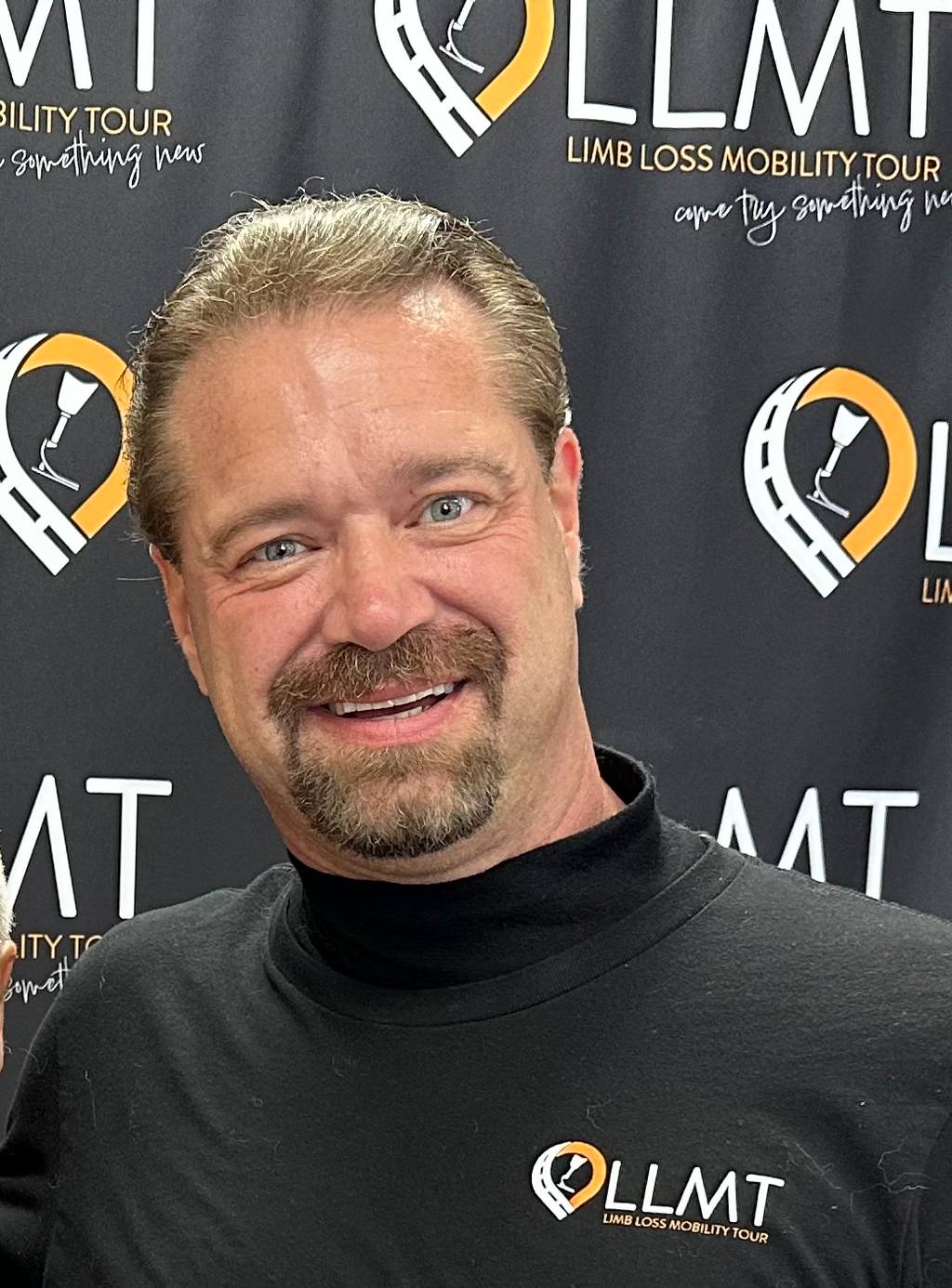
Today I'm a clinical prosthetist and the founder of MyLimb. The thirty years between have shaped both.
What Thirty Years Taught Me
When someone loses a limb, something unexpected happens. They enter a fraternity.
You can be at a farmer's market, a concert, anywhere — and if two people are missing a limb, especially if they're wearing a prosthesis, they find each other across a crowd like two magnets. I've never seen anything quite like it in medicine. Two complete strangers who, in their hearts, aren't strangers at all.
Within minutes they're exchanging numbers. They talk about the good, the bad, and the ugly — the breakthroughs, the hard days, the questions only someone living this would think to ask. The bond doesn't fade after a year or five or twenty. It crosses generations and backgrounds and languages. It happens at that farmer's market in Portsmouth. It happens in São Paulo and Bali and everywhere else two people share this experience.
Nobody taught them to find each other. They just do.
The community already exists. It always has. What's been missing is somewhere for it to live — a place where the connection isn't accidental, where you don't have to bump into someone at a concert to find someone who gets it.
That's the gap MyLimb was built to close.
Why This, Why Now
Thirty years ago I changed one person's life with my own two hands and felt the full weight of what that meant.
The years since have been the same work at the same scale — patient by patient, prosthesis by prosthesis. Each one mattered. None of it was ever enough. MyLimb is an attempt to do that at a different scale entirely — to take what happened in a parking lot in Portsmouth and make it available to millions of people, in whatever form they need it: information, education, community, a moment of humor on a hard day, or simply the knowledge that they're not alone.
I never learned the woman's name. Thirty years on, I think she's the reason every patient I've worked with since has had a chance at the same morning. MyLimb is how we make sure that morning belongs to everyone.